
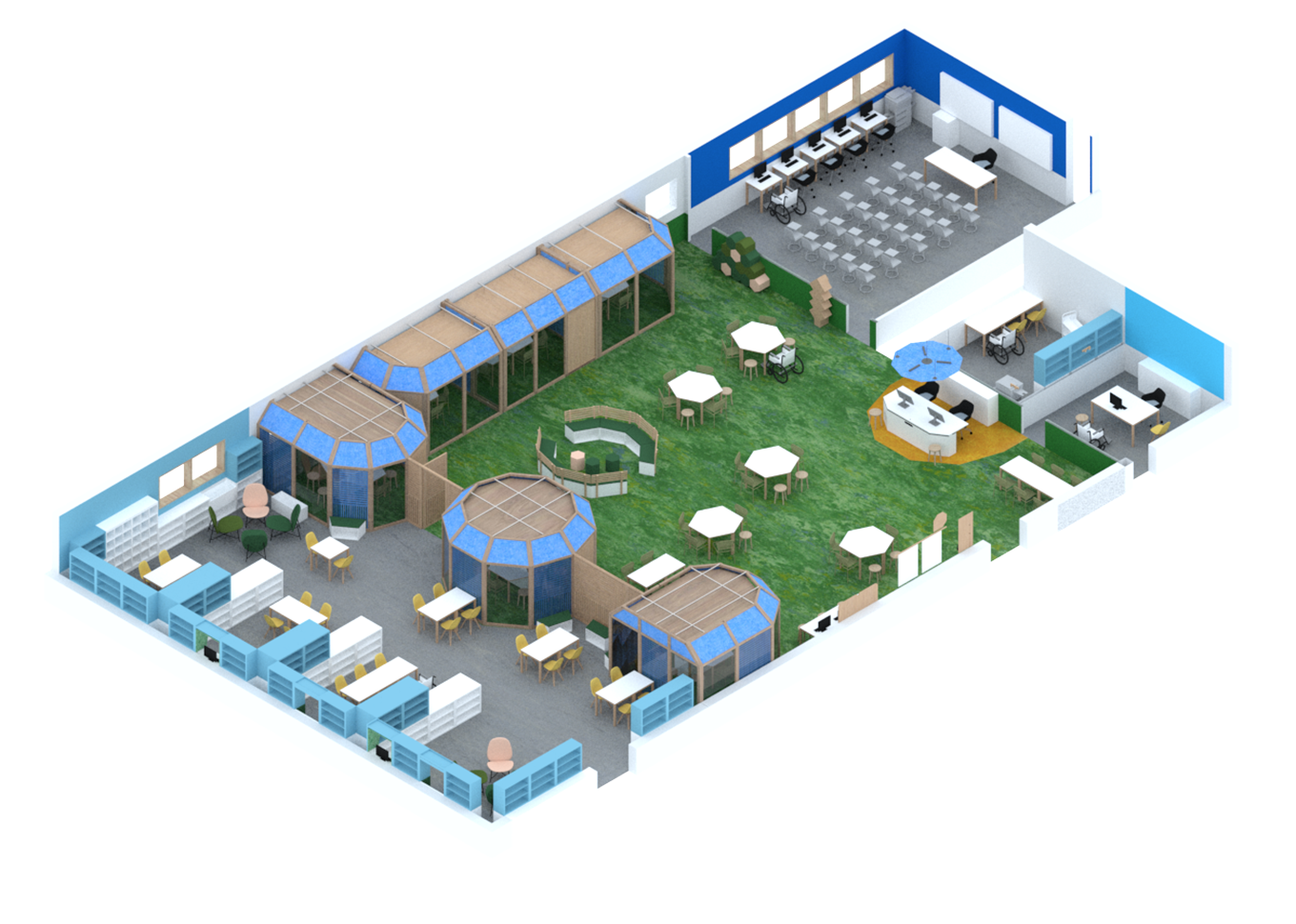
In the age of the digital revolution, what form should information centers take in high schools? What roles should they play? Is digital transformation the only societal evolution that needs to be supported in these places of learning?
Faced with these questions, in 2021, the Ile-de-France region is launching an innovative process to rethink and transform the model of these Documentation and Information Centers (CDI), rethinking them around contemporary uses.
After consultation with students, teachers and technical services, we are designing a new CDI for the Ile-de-France region, which will eventually be extended to all the high schools in the region.
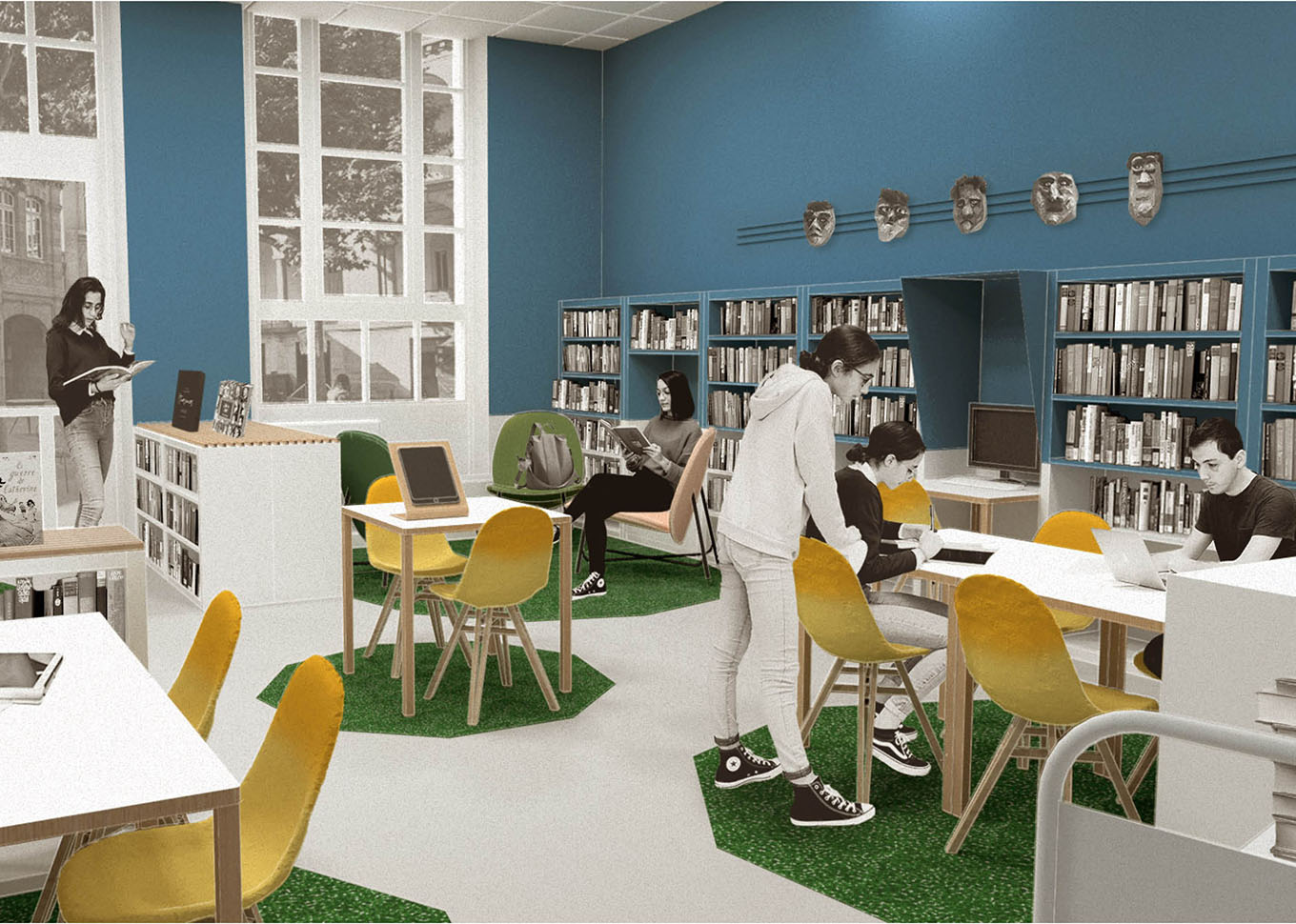
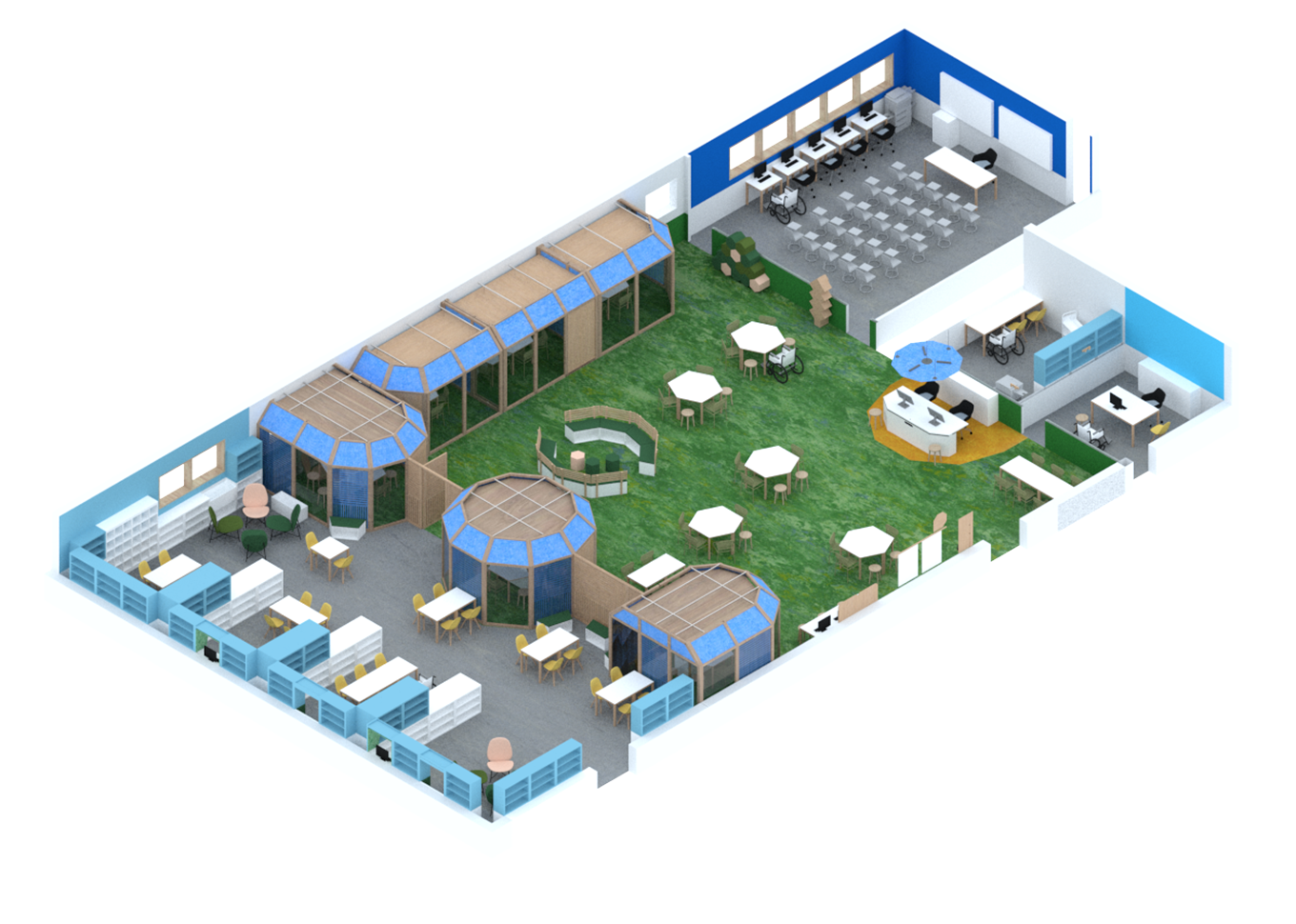
Throughout the region, there are a large number of parks with small buildings that organize the garden and separate the interiors from the exteriors. Part strolling area, part food-for-thought, these parks are known as “fabriques”. These include the Domaine de Chamarande, Parc de Jeurre, Désert de Retz and Parc de la Folie Saint-James. It is this model that serves as inspiration here.
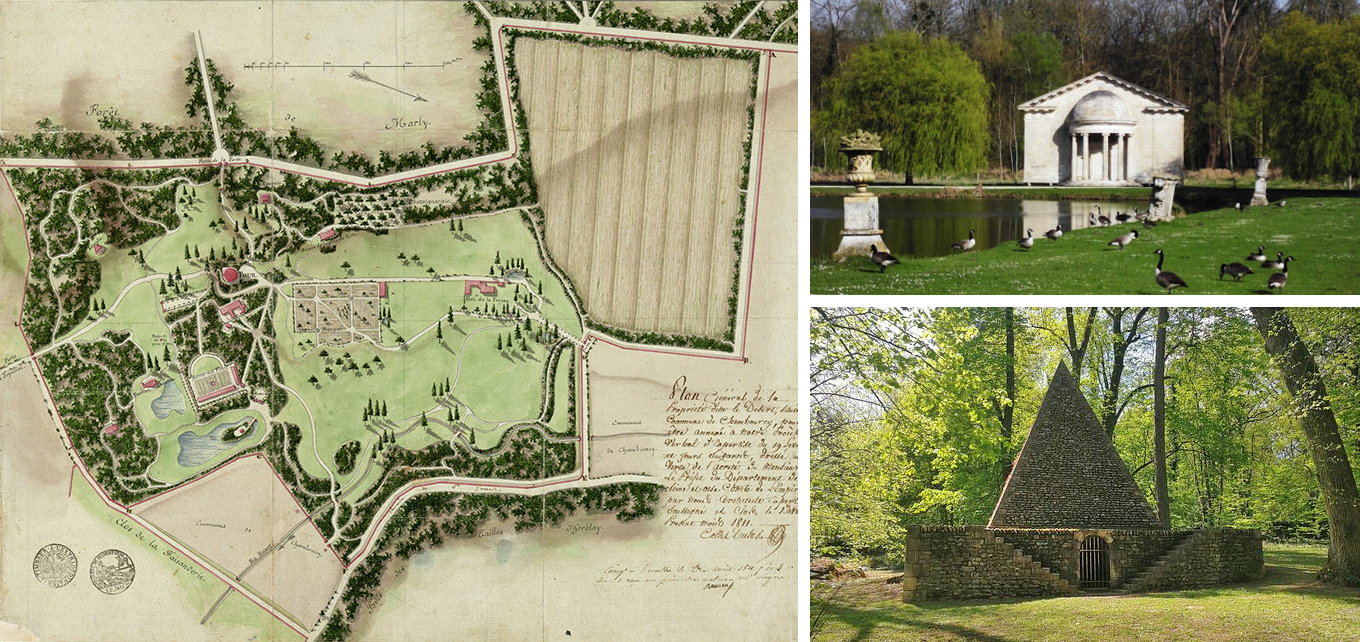
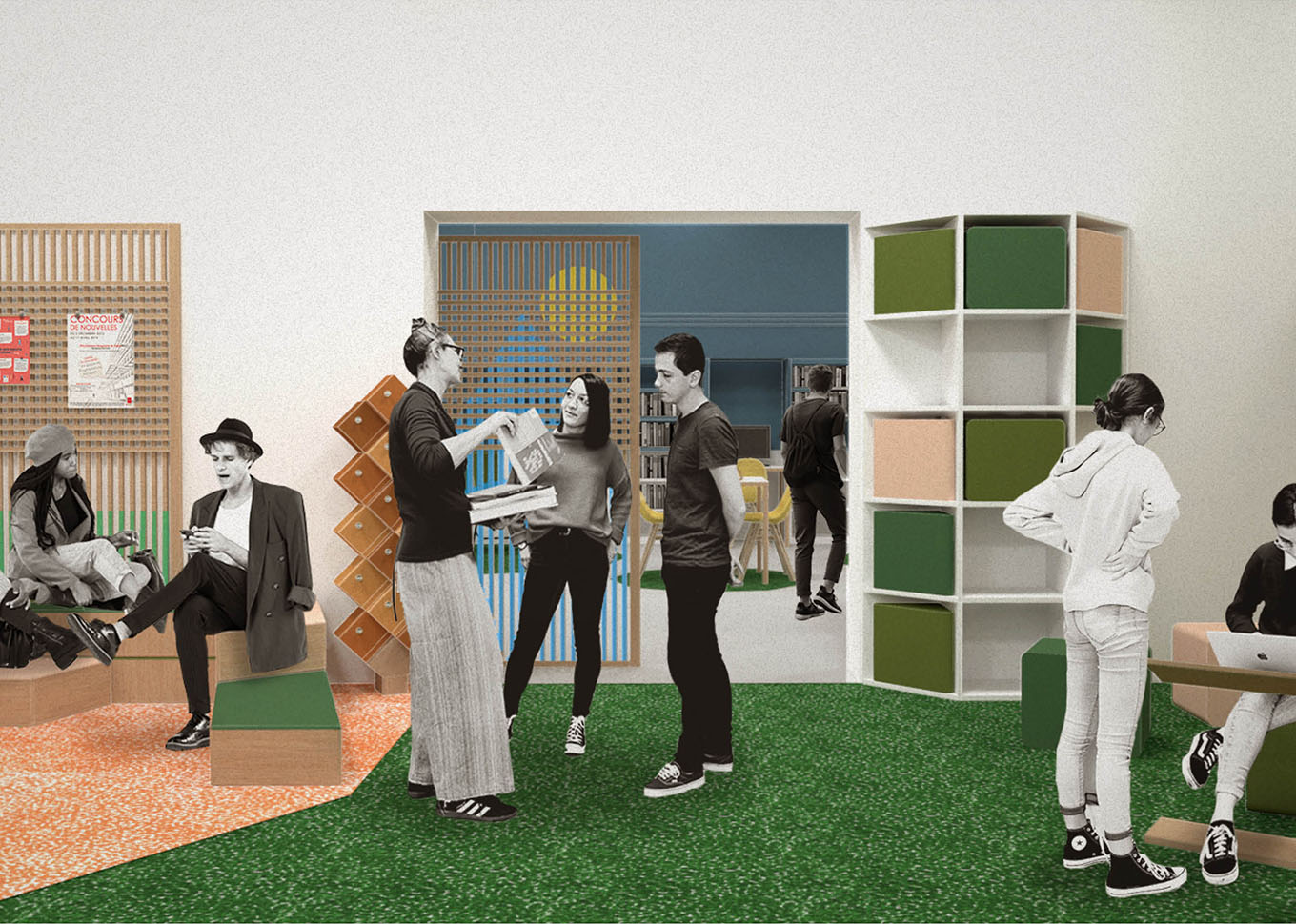
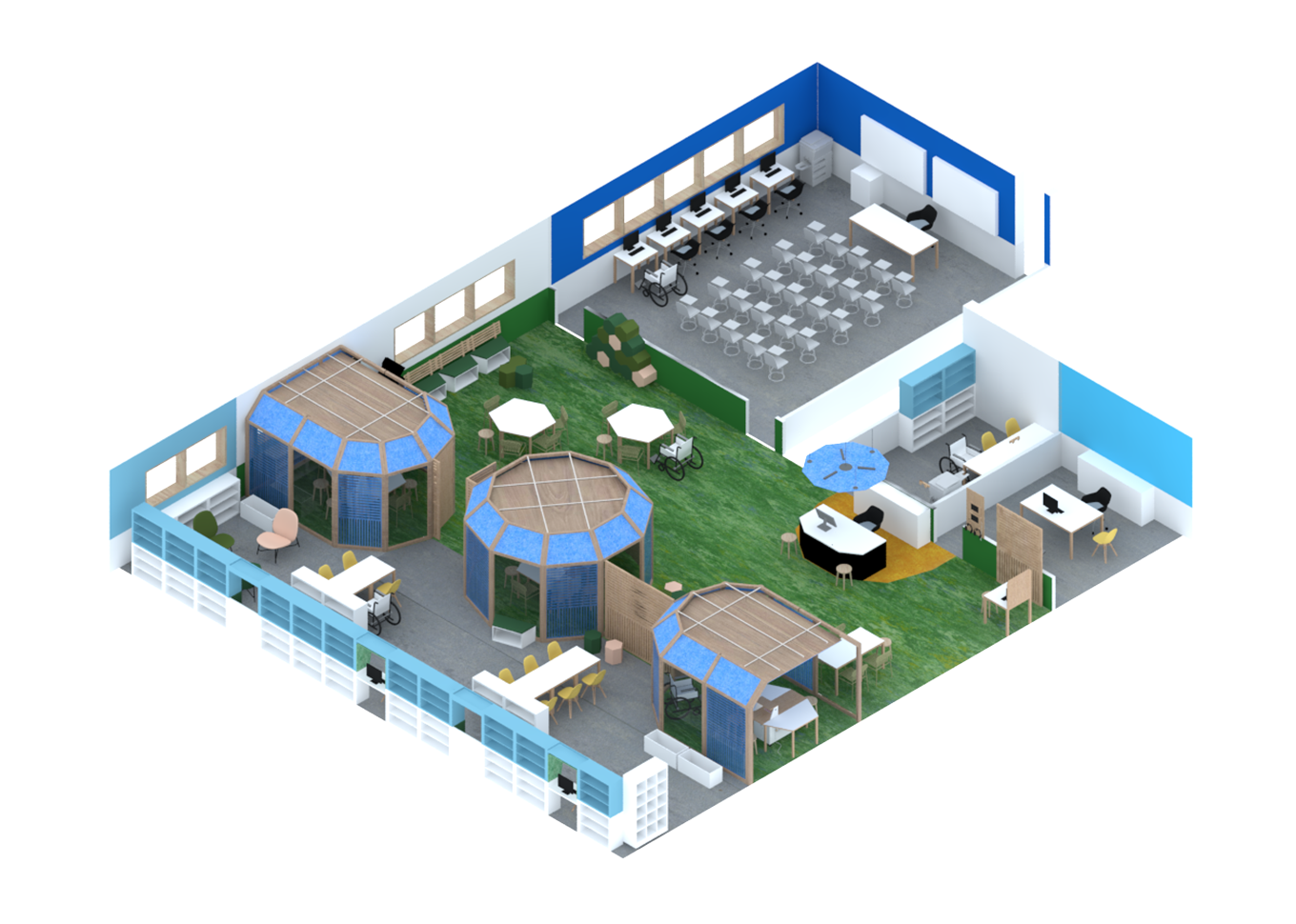
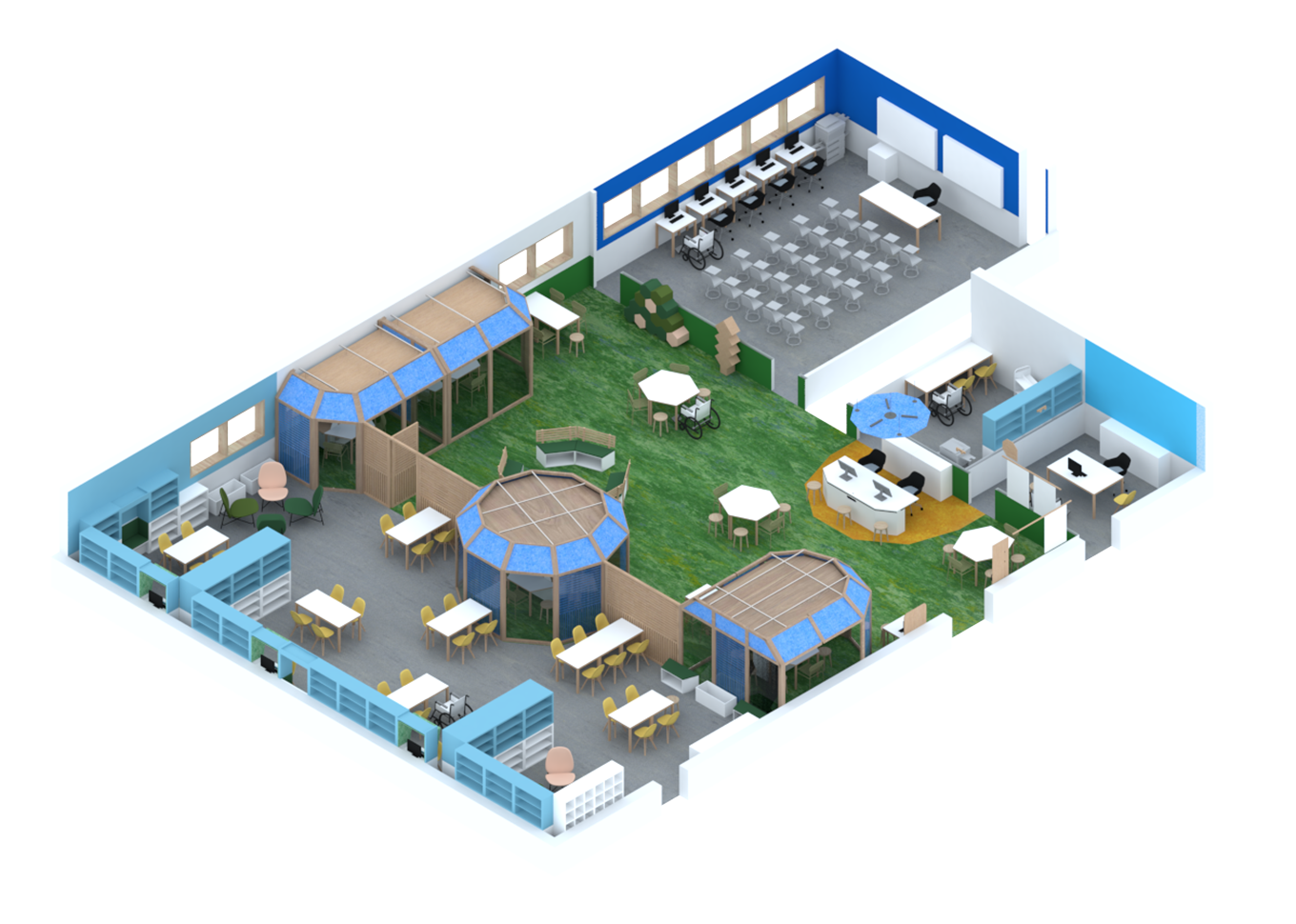
The Documentation and Information Centre takes up this organisation and this metaphor, with a central square thought of as a “garden” or place of collective life, with factories that allow isolation by small groups in pavilions, and finally with other covered spaces, thought of as undergrowth, which accommodate specific functions (books, storage, offices).
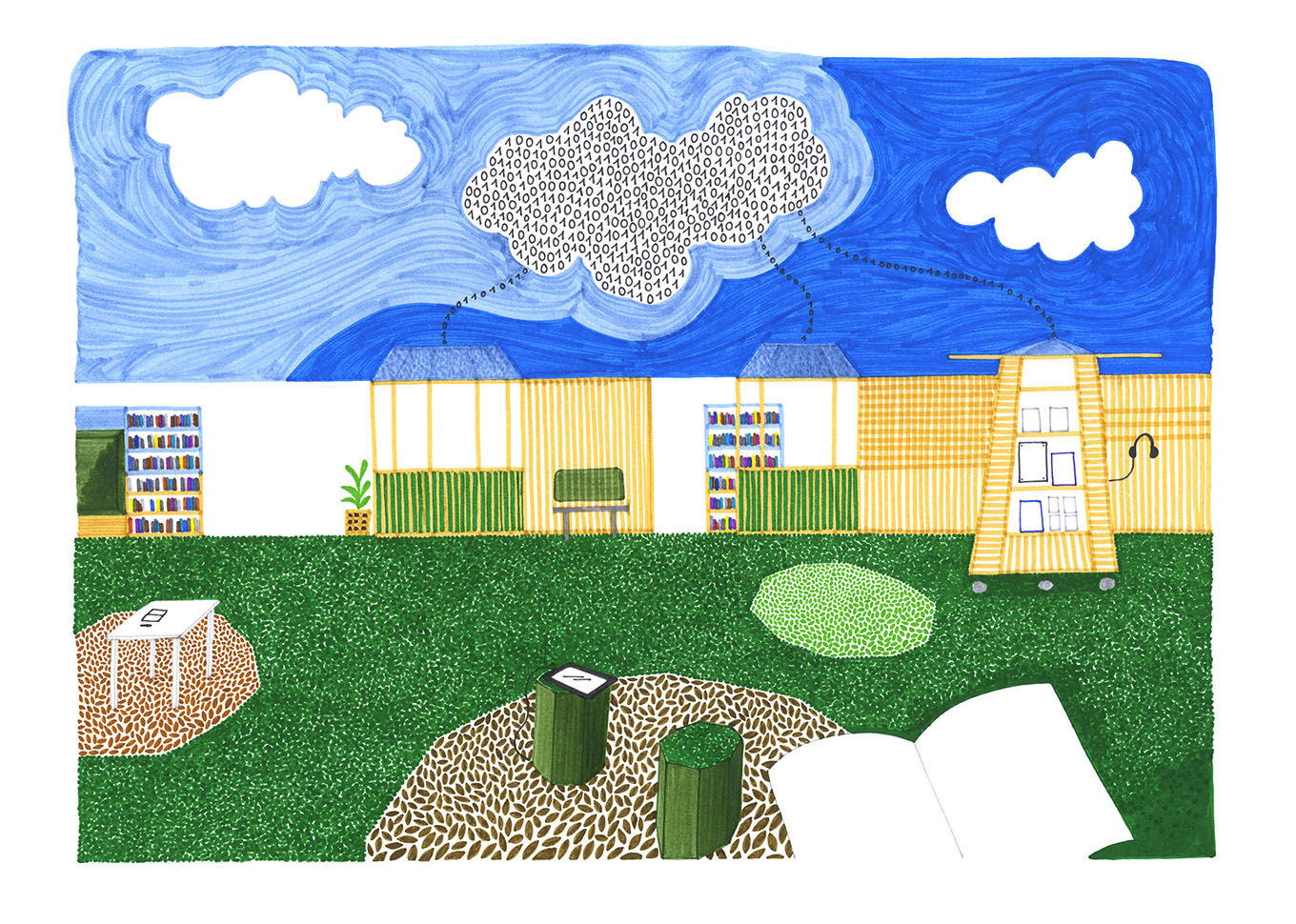

The open area contains a place for relaxation, reading, digital disconnection and sometimes debate. The documentary area, on the other hand, closes easily when the librarians leave. It is quieter and offers quiet alcoves and corners for group study.
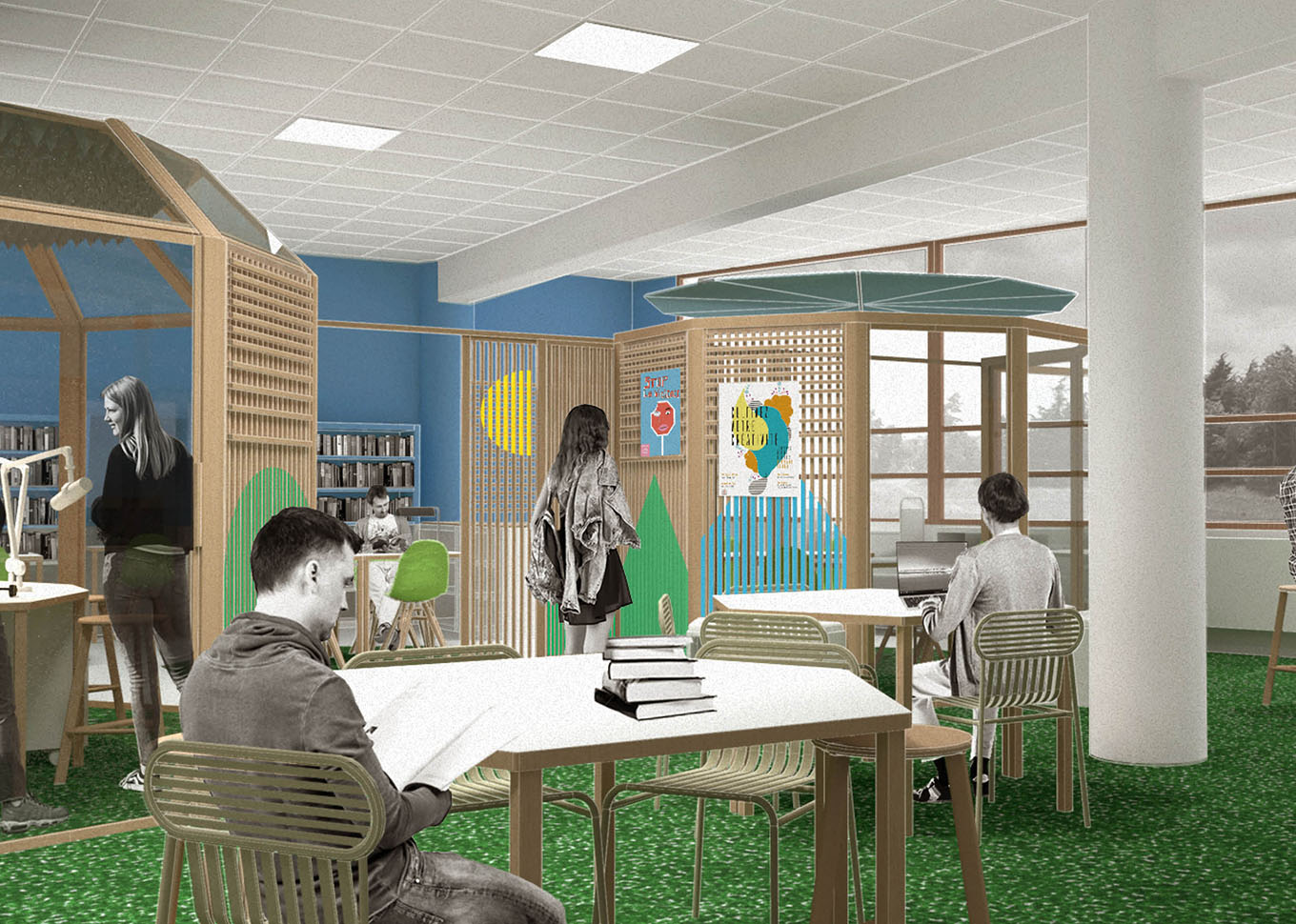
The study includes a variation of the principle on three typical sizes of high schools: 600, 1200, and 1800 students.
2021-2022
Public tender
Team: Studio Idaë + Cyril Afsa + Costanza Matteucci / Sylvain Reymondon + Vincent Hedont
Client: Région Île de de France

Home office: 17 rue Dombasle 75015 Paris
Workshop: 111bis rue Molière 94200 Ivry-sur-Seine
contact@studioidae.com
A multidisciplinary creative agency founded by Isabelle Daëron in 2018, Studio Idaë arose from a reflection on the use of natural flows — water, air, light — in public space.
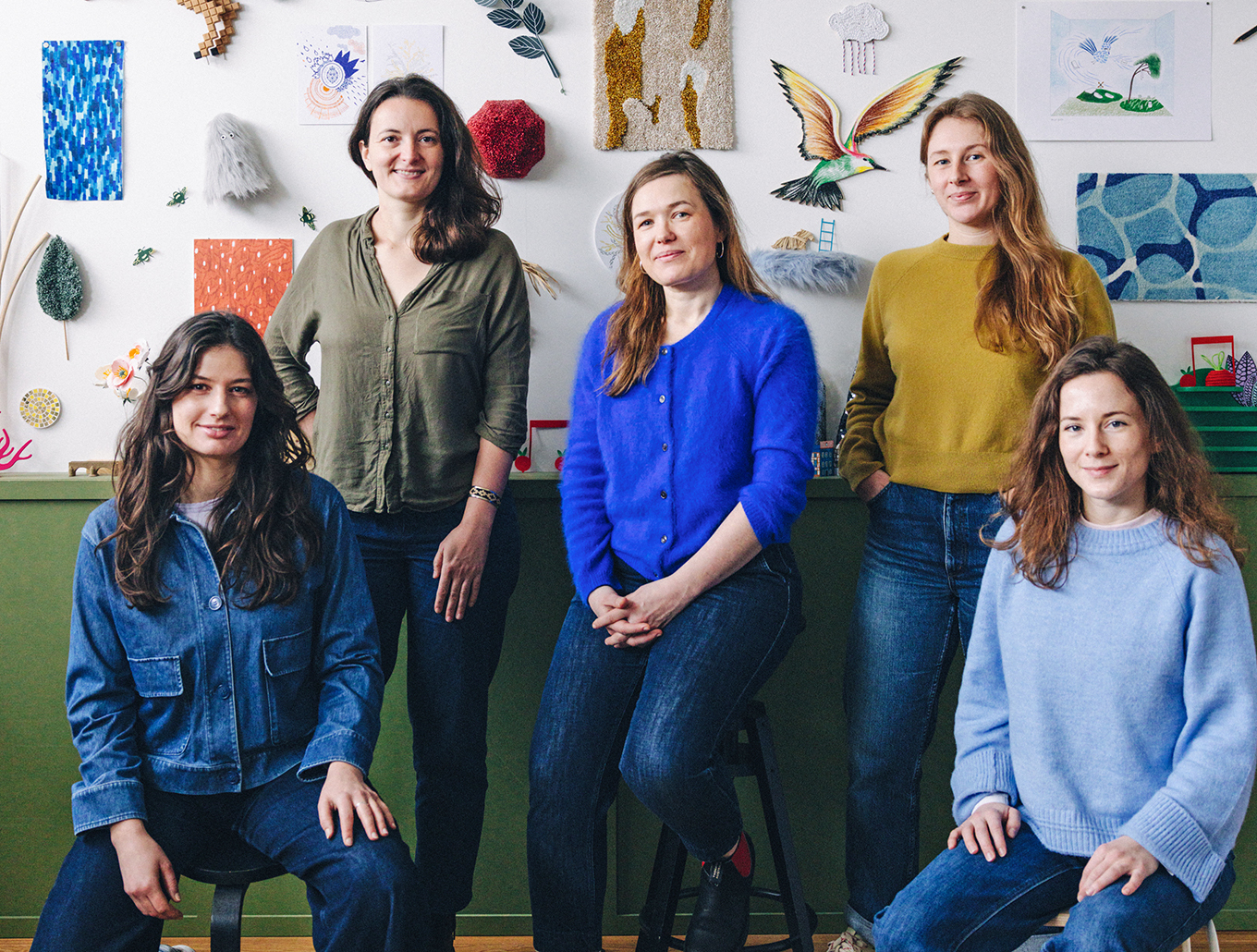
The Studio has, ever since, developed an approach based on research and education, focusing on the urban, environmental and societal challenges of the ecological transition.
Driven by a poetical & committed team of designers, Studio Idaë applies its refined, assertive graphic signature to projects of various scales. From urban devices to mediation objects and supports, or scenography, the agency’s protean contributions always strive at others — their needs, their desires, and their evolution.
The agency operates within a network of local companies and collaborates with dedicated craftspeople to adapt to the specific characteristics of each territory. Together, they work towards the most appropriate and relevant response — between narration and mediation.
Graphic design : Audrey Templier
Web development : Francis Josserand
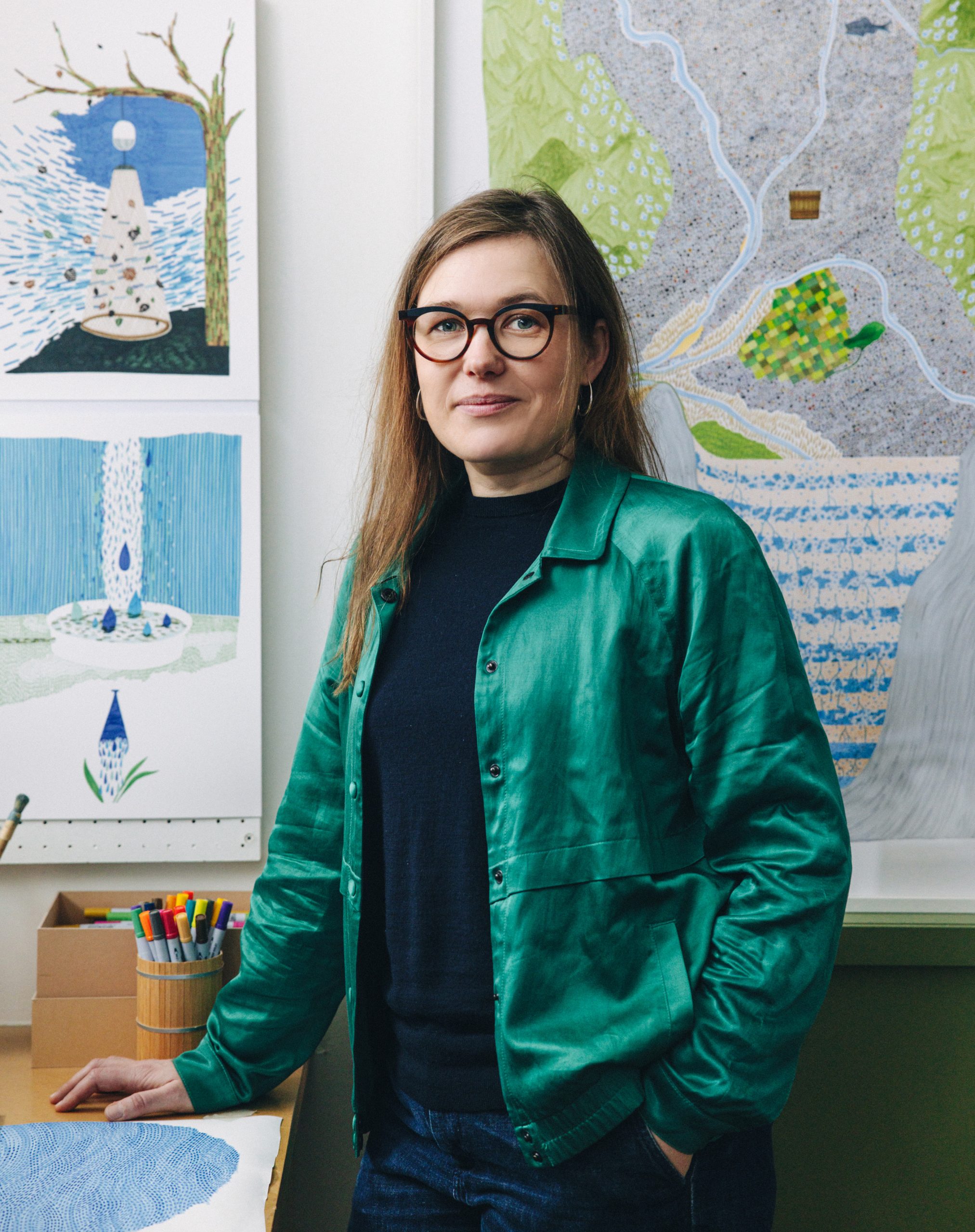
Designer and design researcher, Isabelle Daëron graduated from the École Supérieure d’Art et de Design in Reims in 2005 and the École Nationale Supérieure de Création Industrielle in Paris in 2009. She founded Studio Idaë based on her reflections on the use of natural flows—water, air, light—in public spaces. At the heart of the agency’s work, her practice of drawing and narrative opens up the imagination and a sensitive understanding of environments and their resources.
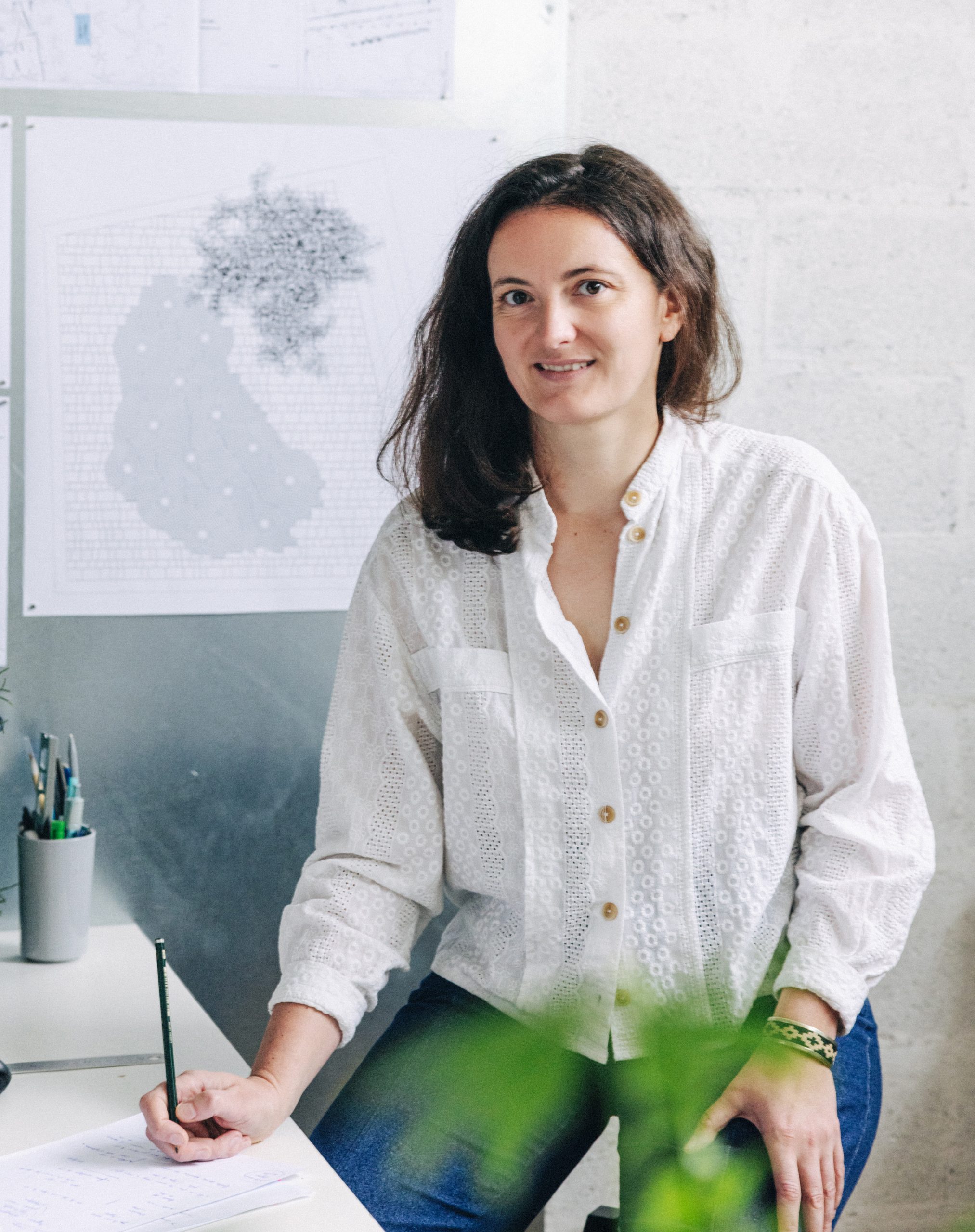
Pauline Avrillon, a graduate of the École Boulle (DSAA product design and DMA carpentry), has been working with Isabelle Daëron since 2016, even before the studio was founded. As a senior project manager, Pauline has a particular interest in materials and manufacturing processes that contribute to resilient and innovative public spaces. She is involved in urban development projects, as well as projects combining mediation and territory.
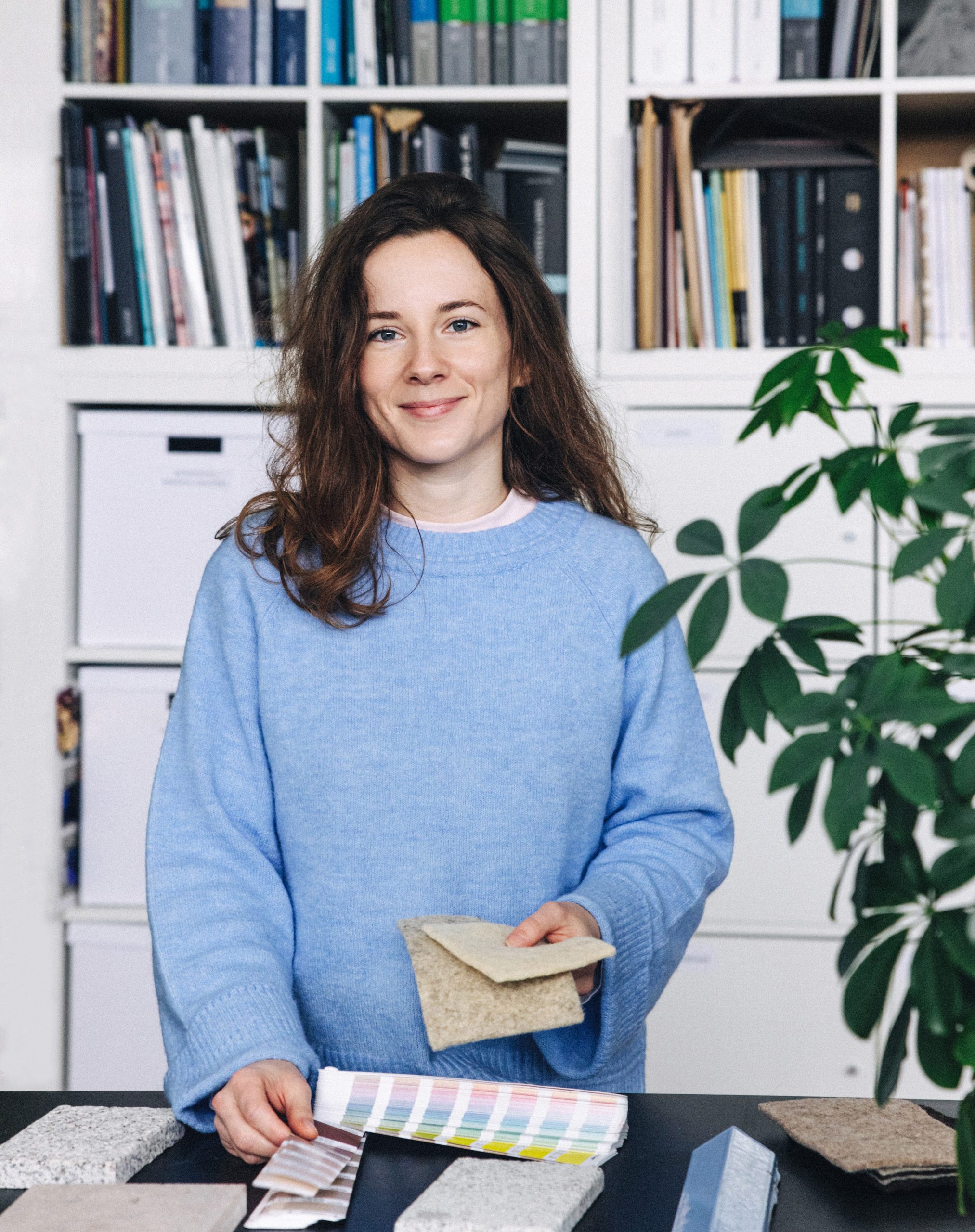
A graduate of Ensci-Les Ateliers, Nina Capron joined the team in 2024. Within the studio, she is developing expertise in spatial design projects. She pays particular attention to the narrative and educational challenges inherent in the creation of scenography and installations.
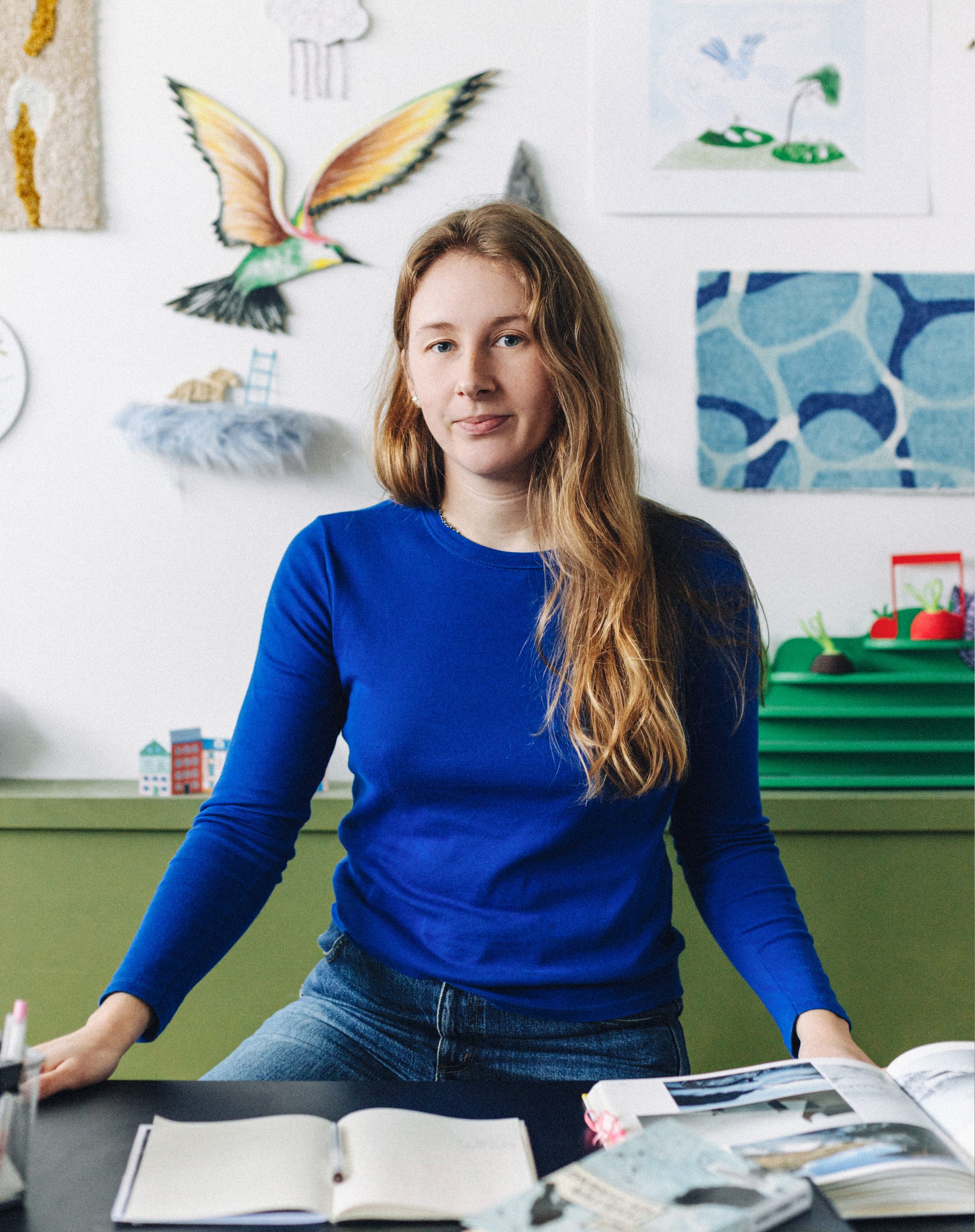
Julie Deloraine, a graduate designer from Esad Saint-Etienne, joined the studio in 2025. By collaborating on set design projects, Julie meticulously develops the graphic and visual aspects of our creations, as a means of making them accessible to all.

Eléna Hervé Caro has been Studio Idaë’s office manager since 2023. A trained designer (graduate of the Design Academy Eindhoven and École Boulle), she oversees the administrative and logistical aspects of the studio’s activities. Convinced of the impact of teamwork and the power of good planning, she contributes to upholding the values of the studio and the entire ecosystem.
They took part in the studio’s projects: Lucie Blanchot, Angèle Fourteau, Chad Garçon, Dalva Rosepape, Nicolas Vuillerme, Elise Teiller, Pia Debray Sandelin, Jonathan Roditi, Caroline Manowicz, Victoria Gravelier, Floriane Roué, Ambroise Jugan, Julie Arnaud, Charlotte Baverel, Simon Frajer, Lita Gomez Carrera, Anne-Claire Hostequin, Camille Demouge, Julien Peraldi, Jonathan Coat, Adèle Nyitrai, Elizabeth Hong, Mathilde Vaillant, Nina Chalot, Julie Arnaud.
Studio Idaë welcomed the following interns: Charlotte Tirard, Margaux Thuilliez, Alice Babot, Julie Deloraine, Marie Avezard, Garance Delavallade, Jaemo Lee, Audrey Solans, Béatrice Baillard, Pia Debray Sandelin, Thibaut Caudal, Léa Michielin, Yalhma Robette, Adriana Goepp, Mélany Savoie, Marie Lecommandoux, Ethen Ben Abda, Mathilde Vaillant, Florian Meca, Tiffany Silve, Nina Capron, Justine Chagnaud, Monika Olszak, Tom Garçon, Éléonore Gold-Dalg, Lucile Girard, Valentin Aubois-Liogier, Bastien Lafont, Chad Garçon, Marie-Ève Millasseau, Marie-Sarah Adenis, Louise Raguet, Camille Jégo, Claire Aubadie-Ladrix, Fleur Moreau.
